Hidden Frequency: The Invisible Hand of Namie Amuro in the Sounds Dominating Pop Right Now
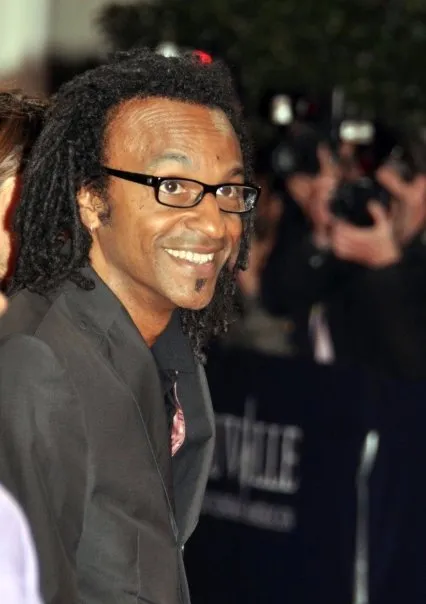
Photo: Georges Biard, CC BY-SA 3.0, via Wikimedia Commons
There's a particular kind of influence that doesn't announce itself. It doesn't show up in a writing credit or a co-sign tweet. It lives inside a chord voicing, a production choice, the way a vocal sits slightly forward in a mix. It's the kind of influence that moves through music like water through rock — slow, patient, and totally reshaping everything it touches. That's exactly the kind of influence Namie Amuro has had on modern pop, and honestly, it's about time we started talking about it out loud.
If you've been anywhere near a playlist in the last five years, you've almost certainly heard her fingerprints without realizing it. The question isn't whether Namie's sonic vision is still alive in contemporary music. The question is how deep it actually goes.
The Production Language She Invented
Let's rewind for a second. Throughout the late '90s and into the 2000s, Namie Amuro was doing things in the studio that Western pop wouldn't fully catch up to for another decade. She was blending R&B rhythmic structures with electronic production textures in ways that felt genuinely futuristic — not in a gimmicky sci-fi way, but in a grounded, emotionally resonant way that made the experimentation feel necessary rather than showy.
Her work with producers like Tetsuya Komuro and later with collaborators on albums like Play and Past < Future established a template: keep the rhythm section skeletal and punchy, layer atmospheric synth pads underneath the melody, and let the vocal breathe rather than bury it in effects. It sounds obvious now. That's exactly the point. The ideas that feel obvious in 2024 were genuinely radical when she was executing them in Tokyo recording sessions twenty years ago.
Music historians who specialize in the cross-pollination between J-Pop and Western production trends have pointed to her mid-2000s output specifically as a kind of Rosetta Stone — a body of work that demonstrated how you could make pop music that was simultaneously maximalist in its emotional impact and minimalist in its sonic architecture. That tension, that push-pull between excess and restraint, is everywhere in the music dominating streaming charts right now.
The Artists Who Know (and the Ones Who Don't)
Here's where things get genuinely interesting. Some of the artists carrying Namie's influence forward know exactly what they're doing. There's a whole community of producers — particularly those who grew up in Asian diaspora households or who came up through online spaces where J-Pop was being dissected and celebrated — who will straight-up tell you that her catalog is required listening.
But then there's another category, maybe even larger, of artists and producers who are working from the same blueprint without necessarily knowing who drew it. They discovered the sounds through other channels — through artists who were themselves influenced by Namie, through the gradual osmosis of production trends moving across borders and genres. The influence has been laundered through so many intermediaries that the original source becomes invisible.
That's not a criticism. That's actually how the most durable artistic influence works. When an idea is good enough, it escapes its origin story and becomes part of the general atmosphere. Namie's production sensibility has become atmospheric — it's just how certain kinds of pop music sound now, without anyone necessarily being able to point to the moment it happened.
Specific Sonic Signatures Worth Tracking
If you want to hear the Namie effect in action, there are a few specific things to listen for. First, pay attention to how contemporary pop handles the pre-chorus. Namie was exceptional at building tension in that transitional space — not with the obvious dramatic swell, but with a kind of controlled anticipation that made the chorus hit harder by contrast. That restrained pre-chorus architecture is everywhere in current pop production.
Second, notice the rhythm programming. Namie's tracks often featured drum patterns that borrowed heavily from American R&B and hip-hop but filtered those influences through a distinctly different cultural lens — the grooves were slightly more precise, slightly more geometric. That quality, which you might describe as rhythmic elegance rather than rhythmic rawness, shows up constantly in contemporary K-Pop and in the more polished corners of Western pop production.
Third, and maybe most importantly, listen to how her records handle space. There are moments in her catalog where the production just opens up — where everything drops away and you're left with a voice and almost nothing else. That willingness to trust silence, to let a vocal carry a moment without production scaffolding, was genuinely countercultural in an era of maximalist pop. Now it's a standard tool in the kit.
Fashion, Image, and the Whole Package
It's worth noting that Namie's influence isn't purely sonic. The way she constructed her artistic identity — the integration of fashion, choreography, and music into a single coherent visual and sonic statement — has become the dominant model for how pop stardom works in the streaming era. The idea that an artist's aesthetic is inseparable from their music, that the visual language has to be as carefully considered as the production, is something she was practicing at a level that most Western artists weren't even theorizing about yet.
You can draw a pretty direct line from how Namie managed her visual identity across different album eras to how contemporary artists think about their own artistic branding. Each project as a complete world. Each visual choice as intentional communication. That's the Namie model, and it's now basically the industry standard.
Why the Credit Gap Exists
So why isn't Namie Amuro's name dropping in interviews the way it should be? Part of it is geography — the music industry has historically been terrible at tracing influence across linguistic and cultural borders. Part of it is timing — she retired in 2018, which means she's not an active presence generating the kind of media coverage that keeps a name in circulation.
But a big part of it is just the nature of how influence works at this level. The deeper an artist's impact, the harder it becomes to see clearly, because the influenced world starts to look like the natural state of things. Namie Amuro didn't just influence specific songs or specific artists. She helped change what pop music sounds like as a category. That's an almost impossible thing to credit properly.
Bringing It Into the Light
Here at Namie Amuro Final Space, we think it matters that people know this history. Not just as a tribute to a genuinely extraordinary artist, but because understanding where sounds come from makes you a smarter listener — and maybe a smarter maker, too. The next time a pop track hits you in that specific way, where everything feels perfectly calibrated and emotionally immediate, take a second to wonder where that sensibility came from.
There's a good chance the answer, if you trace it back far enough, leads to a girl from Okinawa who was quietly rewriting the rules of pop music while the Western industry wasn't paying close enough attention. Her influence is still out there, still working, still shaping what you hear. You just have to know how to listen for it.