When Goodbye Broke the Internet: The Streaming Phenomenon Nobody Expected From Namie Amuro's Final Bow
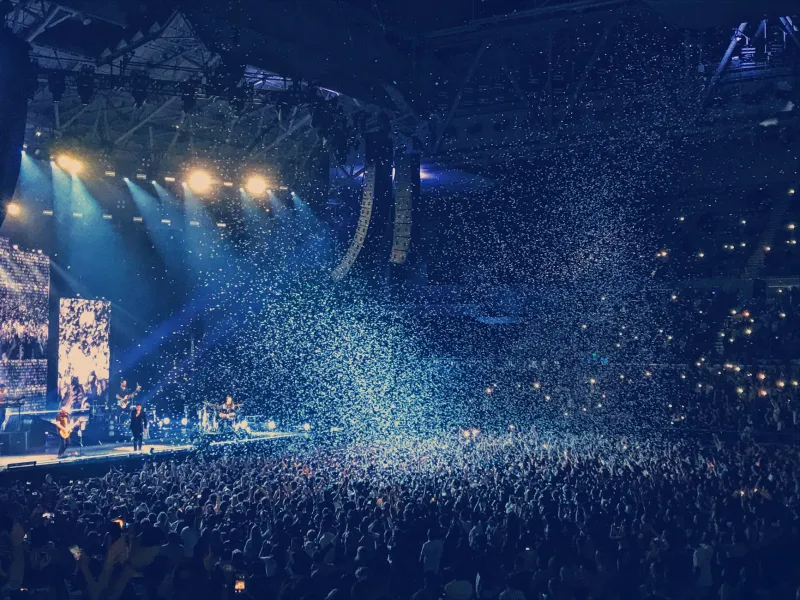
There's a weird thing that happens when something truly irreplaceable disappears. People don't just mourn it — they consume it. They binge it, share it, argue about it at 2 a.m. in comment sections. That's exactly what went down in the wake of Namie Amuro's farewell concert residency, and the numbers that followed were unlike anything the J-pop world had ever seen.
For a lot of American fans, the name Namie Amuro might have floated at the edge of their awareness for years — a name whispered in anime forums, sampled in a beat they couldn't quite place, or referenced by that one friend who's way too deep into Japanese pop culture. But after her final performances made their way onto streaming platforms, something shifted. Suddenly, she wasn't just a footnote in a genre most of the US had slept on. She was an event.
The Residency That Rewrote the Record Books
The 'Namie Amuro Final Space' concert residency wasn't just a goodbye — it was a masterclass in spectacle. Elaborate staging, career-spanning setlists, and the kind of emotional weight that only comes from watching someone perform for the last time. Japanese fans who attended described the atmosphere as somewhere between a celebration and a collective grief session, which honestly sounds about right for any great send-off.
When footage and official recordings from the residency hit streaming platforms, the response was immediate and massive. Streams of her back catalog spiked in ways that analysts struggled to contextualize. Her older albums — stuff recorded in the late '90s and early 2000s — suddenly found new life alongside more recent material. Tracks that hadn't charted in years started climbing again. And a significant chunk of those new listeners? They weren't in Japan.
Western audiences, particularly in the US, latched on in a way that felt almost overdue. Playlist curators noticed. Algorithm-driven recommendation engines picked up the signal. Before long, Namie Amuro was showing up in "if you like this" suggestions next to artists like Aaliyah, Janet Jackson, and early Beyoncé — comparisons that, frankly, she'd earned a long time ago.
The Scarcity Effect in the Streaming Age
Here's the paradox that makes this whole story so fascinating: Namie Amuro retired. She stepped away from the industry completely in 2018. No new music, no press runs, no social media presence to keep the algorithm fed. By every conventional metric, she should have faded. That's just how the attention economy works, right?
Except it didn't happen that way. The absence created demand. When people realized there would never be another Namie Amuro album, never another tour, never another era to look forward to, the existing catalog became precious in a way it simply hadn't been when she was still active. Every song felt like a limited edition. Every live performance felt like a document of something irreplaceable.
This is what economists might call an artificial scarcity effect, except in this case, it wasn't manufactured — it was just real. She was genuinely gone. And in a streaming landscape where most artists are constantly flooding feeds with content, that silence was deafening in the best possible way.
Marketing professors could write entire case studies on this. Actually, some probably already have.
What Western Listeners Are Actually Responding To
Talk to American fans who found Namie through the post-residency streaming wave and a few themes come up over and over. First, there's the production. Her mid-career records, especially the ones that leaned into R&B and electronic influences, hit differently for listeners raised on early 2000s American pop. There's a sonic familiarity there — the drum patterns, the vocal layering, the way the hooks are constructed — that doesn't require any cultural translation.
Second, there's the visual identity. Thanks to YouTube and various archival fan projects, the concert footage and music videos are more accessible than ever. And Western audiences discovering that footage are consistently floored by how ahead of the curve her styling and choreography were. There's a reason fashion historians keep circling back to her — she was doing things on stage that American pop stars wouldn't catch up to for another decade.
Third — and this one's a little harder to quantify — there's the mystique. In an era where every celebrity is accessible to the point of oversaturation, Namie Amuro's total withdrawal from public life has made her almost mythological. You can't follow her. You can't see what she had for breakfast. All you have is the work, and it turns out the work is extraordinary enough to stand completely on its own.
Fandom as Preservation
One thing the streaming surge made visible was just how organized and dedicated the international Namie Amuro fan community actually is. Sites like this one, fan archives, translation projects, YouTube channels dedicated to preserving and contextualizing her catalog — these weren't just passion projects. They were infrastructure. When new listeners arrived in waves after the concert residency buzz, they found a fully built ecosystem waiting for them.
That's not an accident. It's the result of years of work by fans who understood, maybe before the broader industry did, that they were dealing with a legacy that deserved serious preservation. The streaming numbers are impressive, but behind them is a community effort that made discovery possible in the first place.
For American fans especially, who often come to J-pop without a lot of cultural context, having that community infrastructure matters enormously. It's the difference between a curiosity and a genuine deep dive.
What This Tells Us About the Future of Pop Legacies
The Namie Amuro streaming phenomenon isn't just a feel-good story about a beloved artist getting her flowers. It's a signal about how pop legacies are going to function in the digital age.
The old model assumed that relevance required constant activity — new releases, press cycles, social media engagement. Namie blew that model up simply by being so good that her absence became its own kind of presence. The final concert residency wasn't a conclusion so much as a catalyst, a moment that crystallized everything her career had meant and sent it ricocheting into a new generation of ears.
For artists and labels watching from the sidelines, there's a lesson here that's both inspiring and a little uncomfortable: sometimes the most powerful thing you can release is nothing at all. Let the work speak. Trust the catalog. Step back and let people miss you.
Namie Amuro didn't need an algorithm. She just needed time — and a goodbye worthy of everything she'd built.
And based on those streaming numbers, the world is still not done saying hello.


