The Music She Never Made: How Namie Amuro's Unheard Work Defines Her Legacy
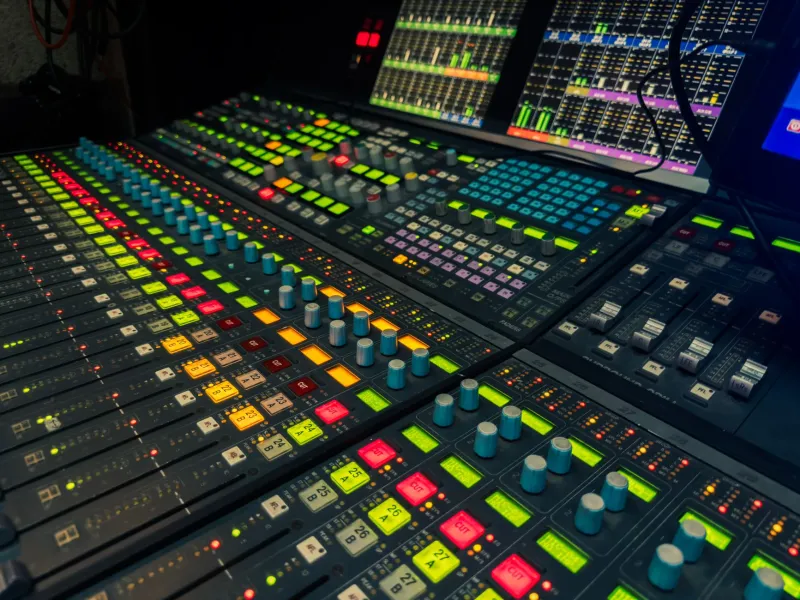
We live in an era of the vault drop. Artists release demos, alternate versions, and decade-old sketches with the same frequency they once reserved for finished albums. Every scrap gets monetized. Every rough edge gets smoothed into content. In that context, Namie Amuro's relationship with her unreleased material stands out as something almost radical: she kept most of it to herself.
What we know about the music Amuro didn't release comes in fragments — producer interviews, fan accounts of sessions that were referenced and never followed up on, and the occasional cryptic acknowledgment in a rare press appearance. Taken together, those fragments sketch the outline of a parallel discography that's as interesting, in its own way, as the one we actually have.
The Collaborations That Didn't Happen
Throughout the 2000s and into the 2010s, Amuro was positioned — at least on paper — to make the kind of crossover moves that would have landed her on American radio. Producers who worked in her orbit during that period have spoken in general terms about sessions that connected her with Western talent, some of it high-profile.
What's notable is how few of those connections produced finished, released work. Whether the reasons were creative, contractual, or simply a matter of Amuro's own judgment about what fit her vision, the results stayed in hard drives and session archives rather than on albums. And looking back, it's hard to argue she was wrong.
The tracks she did release during that era — particularly the run from Play through Past < Future — have aged remarkably well precisely because they don't feel like they were chasing anything. They sound like Namie Amuro making exactly the music she wanted to make. A version of that period crowded with guest features and Western co-writes might have generated more industry buzz at the time. It almost certainly would have felt more dated now.
The Scrapped Album That Fans Still Talk About
In fan communities, one of the most persistent threads involves a project — never officially confirmed, never officially denied — that Amuro was reportedly developing around 2015 or 2016, before the announcement of _genic and the eventual retirement arc. The details are hazy and speculative, assembled from secondhand accounts and producer credits that appeared briefly and then disappeared from industry databases.
Whether or not the project existed in any complete form, the conversation around it reveals something important about how Amuro's fans relate to her catalog. The gaps aren't frustrating voids. They're spaces where imagination lives. Because Amuro released so deliberately, every album carries the implicit weight of everything that didn't make it — and that weight gives her official work a density it might not otherwise have.
This is not a common dynamic. Most artists' unreleased material, when it eventually surfaces, tends to clarify why it wasn't released in the first place. With Amuro, the unreleased material — at least in its imagined form — feels like it could have been extraordinary, because her standard for what got through was so visibly high.
Restraint as a Creative Philosophy
American pop culture has a complicated relationship with restraint. We celebrate prolific output. We reward the grind. The idea that an artist might be making music that never sees the light of day — by choice, not by circumstance — runs counter to the content-machine logic that dominates the industry.
Amuro operated on different principles. Her studio albums came at measured intervals. Singles were released with intention rather than frequency. She didn't flood the market with product, and as a result, every release carried a sense of occasion. You paid attention because she wasn't always asking you to pay attention.
That philosophy extended to her visual output, her public statements, and her personal brand. She didn't overshare. She didn't give you everything. And in withholding, she created a version of herself that was larger than any specific piece of content could contain. The Namie Amuro that fans carry around in their heads is partly assembled from what she gave them and partly from what they've filled in themselves.
What the Gaps Tell Us About the Catalog We Have
When you understand how much Amuro chose not to release, the albums that did come out take on a different character. Concentration 20 isn't just a debut — it's the beginning of a curation process. Sweet 19 Blues isn't just a breakout record — it's evidence of a standard being set. Play isn't just a stylistic pivot — it's a deliberate statement about where she was willing to go and, implicitly, where she wasn't.
The negative space in a discography tells you as much about an artist as the work itself. What did they reject? What didn't fit? What were they protecting? For Amuro, those questions point toward a coherent artistic identity that held across three decades of a changing industry — which is an extraordinary thing to maintain.
The Lesson for Artists in the Oversharing Era
There's a generation of emerging artists watching Amuro's legacy take shape and drawing conclusions. Some of the most interesting voices in pop right now are artists who are deliberately pacing themselves — dropping less, making each release feel considered, maintaining a deliberate mystique in an era that punishes silence.
They're not all citing Amuro directly. But the logic they're operating on is one she embodied before it was a strategy anyone could name. In a world where attention is cheap and ubiquity is the default, scarcity becomes power. Choosing what not to release is as much a creative act as choosing what to put out.
The music Namie Amuro never gave us is, in a real sense, part of her legacy. The silence around the edges of her catalog isn't absence — it's architecture. And it's held up better than almost anything else in the industry she helped shape.
Here at Namie Amuro Final Space, we've always believed that the full story of her artistry lives between the tracks as much as on them. The unheard music isn't a mystery to solve. It's an invitation to listen more closely to everything she did choose to share.